
Finding Peace

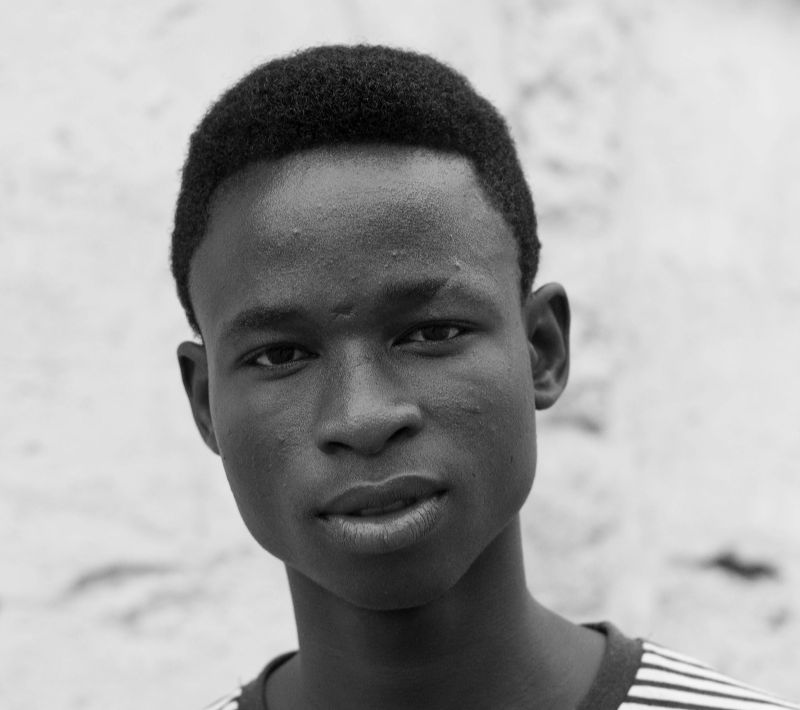
This is the story of Amari.
Meet Amari, a young boy from a small town on the outskirts of the country, where opportunities were as rare as diamonds. Despite the odds, Amari was determined to build a better future for himself and his aging father.
Amari’s father, Victor, was a fisherman. He would often go to sea for extended periods, leaving young Amari to fend for himself, making do with whatever was left at home, hoping to return with a big catch. Amari’s mother died when he was 3 years old due to illness, and without money for proper medical care, she sadly passed away. This loss left a deep wound in the hearts of Amari and his father. Every day, Victor blamed himself for being useless and for not being able to protect his “star,” as he fondly called his wife. As time went on, he pushed himself harder to provide for his son, often neglecting his own health.
Over time, Amari felt no different from an orphan. He hated the fact that poverty had taken his family away from him. This made him even more determined to escape the shackles of poverty. Although his father would return occasionally, he spent little time with him, mostly resting due to the exhausting nature of his work. While Victor was at sea, Amari took care of the farm behind their house, growing vegetables for food. This was the system between father and son.
This continued until Amari turned 11 years old. On a windy night, tragedy struck the small town. It was reported that a storm occurred at sea, and none of the fishermen survived. Amari was devastated. He could not even bury his father properly, as many bodies, including his father’s, were lost in the sea.

Amari was sent to an orphanage because none of his relatives accepted him. They called him a jinx, a burden, and an extra mouth to feed. Life in the orphanage started well at first, but Amari was often sidelined by the other children because of his strange temperament. He was only close to a little girl who joined the orphanage shortly after him.
Life went on until a family came to adopt him at the age of 13. After all the paperwork was completed, he went home with them, leaving behind his “white moonlight” (the little girl). Amari lived comfortably with his new family for about six months. However, he noticed that his new parents sometimes acted suspiciously, but he ignored it, thinking, “As long as I can eat and sleep well, it doesn’t matter.”
One day, his adoptive parents told him they were going on a family trip. They packed their things and left the city. Unfortunately for Amari, they were not just suspicious people, they were human traffickers who used fake identities to adopt children and sell them at high prices.
Amari tried to escape when he realized the truth, but it was futile. Upon entering the building, he saw many children of different ages, separated by gender in large cage-like structures. He watched helplessly as the people he called parents left without looking back, counting their money with smiles.
Amari was thrown into a room full of young boys and learned that in a few days it would be “trade day.” If you were lucky, you would be bought by someone decent. Those who were not bought would remain until the next trade day. The day came and passed, but Amari was not chosen. He would have to endure another month.

The experience was unimaginable for a child so young. The children matured quickly, learning survival tactics in a place worse than a dungeon. Those who resisted were beaten with thick sticks. The place was filled with a foul smell, food and water were scarce, and medicine was rare. Amari had not seen sunlight since entering that place.
Still, this did not break him. He was determined to build something for himself, something that could not be taken away like his parents were. He noticed he was among the few healthy boys left. He decided to hold on until the next trade day and hope for a better outcome.
When trade day came again, Amari waited patiently. Time passed, and still no one chose him. Just 20 minutes before the end, a man in his late forties arrived. He wore an all-black outfit, heavy gold jewelry, and held a cigar. After observing Amari, he asked his name.
“My name is Amari,” he replied calmly.
“Nice name,” the man said, puffing his cigar. “You can keep it.”
The man then selected four more boys and paid for all of them, even though some looked sickly.
At their destination, they learned the man’s name was Caleb, a notorious figure who ran a factory and bought children to use as free labor.
Amari and the others worked tirelessly from sunrise to sunset with little food or rest. The factory produced toxic chemicals, and illness was common. Amari often volunteered for transport duties, using the opportunity to study the roads and plan an escape. The facility was heavily guarded, making escape difficult.
After more than a year, Amari and a few boys finally escaped. They wandered, surviving on plants, insects, and anything they could find. Eventually, they reached a small village. Though the villagers were initially skeptical, they took them in, treated their wounds, and gave them small jobs to help them survive.
At 20 years old, Amari had become a hardworking young man. He decided to leave the village for a nearby town using the money he had saved. The boys he escaped with chose to remain in the village, saying they had nothing to return to. Though Amari disagreed, he respected their decision and left on his own.
Despite his lack of education, Amari believed that hard work and honesty would guide his path. Upon arriving in town, he noticed it was more developed than anywhere he had lived before. Looking up at the sky, he smiled and said, “Mom, Dad, I hope you continue to watch over me and protect me. This is where my new life starts. I will make you proud.”

He worked many jobs: cleaning, delivering goods, and selling items. Amari became a jack of all trades.
One day, during a delivery, he accidentally knocked down a young woman. Panicked, he rushed her to the hospital. After some time, she regained consciousness.
“Madam, I am so sorry,” Amari said quickly. “I wasn’t careful and accidentally hit you. The doctor said you have a mild concussion. Don’t worry, I’ve covered the medical expenses.”
“Amari… is that really you?” the young woman asked with a smile.
Confused, he looked at her.
“Silly, don’t you recognize me, you ugly stone?” she said playfully.
Amari paused, then remembered, the little girl from the orphanage.
“Nalani?” he asked.
“Yes! Have I become so beautiful that you can’t recognize me?” she teased.
Amari smiled and tapped her head. “Stupid girl.”
She cried out dramatically, “Ah! Do you want to kill me?”
They both laughed. Fate had brought them back together.
After Nalani was discharged, they shared their stories. Nalani had been adopted by a loving family and lived a good life. Amari sighed, “At least one of us had a good life.”
From that day, they became inseparable. Nalani introduced Amari to her adoptive parents, who welcomed him warmly. Though not wealthy, they were kind and respectable.
Years later, Amari and Nalani got married and built a family together. Amari promised that even if he could not give them everything, he would ensure they lived a good life.
Now an elderly couple, Amari and Nalani sat side by side on a wooden bench during a New Year’s Eve celebration. The air was filled with laughter, soft music, and the distant crackle of fireworks being prepared. Around them were their children and grandchildren, running about with joy, their voices blending into a beautiful noise that spoke of life, continuity, and hope.

The sky slowly shifted from a warm orange to a deep shade of blue as the sun began to set. Amari watched it quietly, his eyes heavy with years of memories: pain, loss, struggle, and survival. His hand found Nalani’s, and he held it gently, as though it was the one thing in life he never wanted to lose.
“I didn’t live the life I once dreamed of,” he said softly, his voice calm but reflective. “And I am not as wealthy as I thought I would be… but I am at peace. I believe my parents would be proud of me.”
Nalani turned to him, her eyes filled with warmth and quiet understanding. She squeezed his hand lightly and smiled.


“Of course they would be,” she said. “They would be even more proud that I am their daughter-in-law.”
Amari let out a soft laugh, shaking his head. “You haven’t changed,” he said.
“And neither have you,” she replied.
They both laughed, not loudly, but in a way that carried years of shared experiences, every hardship they had endured, every small victory they had celebrated, every moment they had chosen to stay and fight together.
Amari looked around at the family they had built. Children who had never known hunger the way he did. Grandchildren who laughed freely, untouched by the darkness he once lived in. In that moment, he realized something deeper than success, something richer than wealth.
He had broken the cycle.
The cold nights, the empty stomachs, the fear, the loneliness, they had all ended with him. What stood before him now was proof that his pain had not been in vain.
As the first fireworks lit up the sky, painting it with colors of gold, red, and blue, Amari leaned back slightly, still holding Nalani’s hand.
“Thank you,” he said quietly.
“For what?” she asked.
“For staying… for finding me again… for giving me a reason to keep going.”
Nalani rested her head gently on his shoulder. “We found each other,” she said. “That’s all that matters.”
The countdown to the new year began, voices rising in unison.
“Ten… nine… eight…”
Amari closed his eyes for a brief moment, letting the sound wash over him.
“…three… two… one!”
Cheers erupted. Fireworks exploded across the sky. Laughter filled the air.
Amari opened his eyes, a small, content smile resting on his face.
For the first time in a long time, there was no weight in his chest. No longing. No regret.
Just peace.
And in that quiet, beautiful moment, Amari knew, he had finally found it.
What's Your Reaction?