
Nipah Virus: India’s Latest Outbreak and Global Health Concerns


The Nipah Virus Origin and Spread
A new outbreak has hit India and has put the world on alert. The Nipah virus is a bat-borne (particularly from fruit bats) infectious agent that causes a febrile zoonotic disease in humans. It can be transmitted not only from animals but also through contaminated food and close or direct contact with infected people.
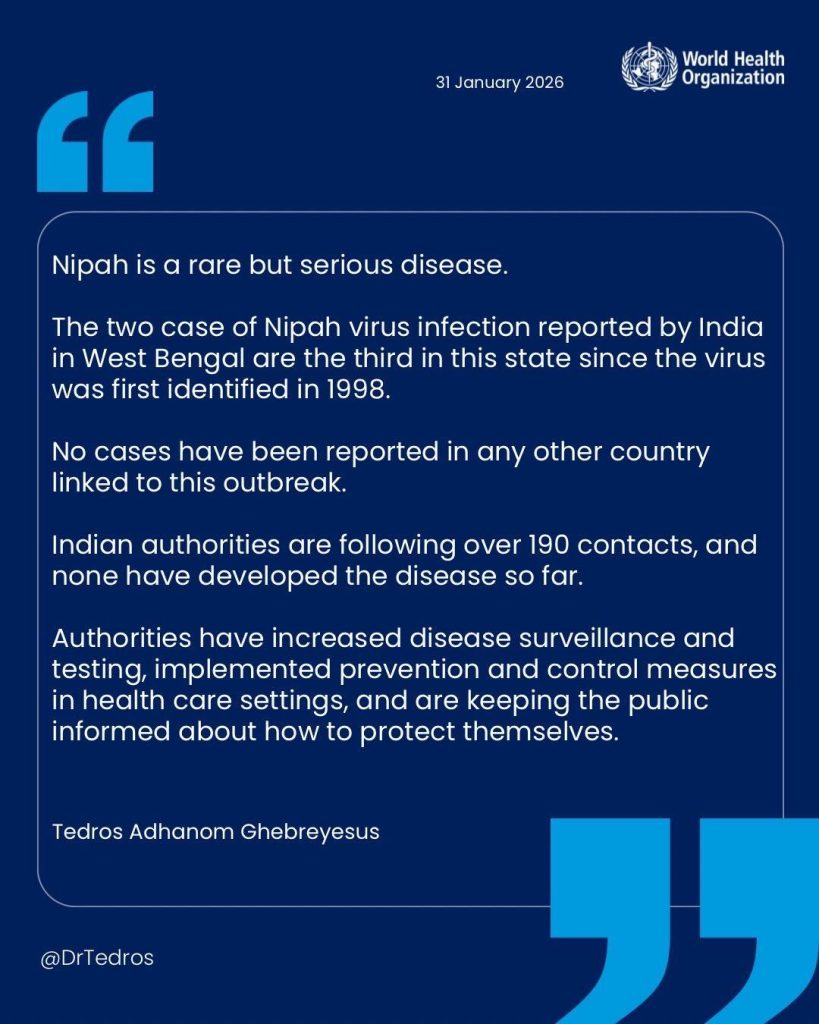
The virus was first discovered in 1998 during an outbreak among pig farmers in Malaysia and later in Singapore. This once dormant virus has resurfaced in India, specifically in West Bengal. On 26 January 2026, the National IHR Focal Point for India notified the World Health Organization (WHO) of two laboratory-confirmed cases of Nipah virus (NiV) infection in West Bengal State. Both cases involved healthcare workers at the same private hospital in Barasat.
The Nipah virus has previously been detected in Bangladesh, India, Malaysia, the Philippines, and Singapore, and has largely circulated within South and Southeast Asia. In response to the renewed outbreak, countries such as Taiwan, Nepal, Thailand, and Pakistan have introduced screening protocols for passengers entering their countries to check for signs of Nipah virus infection.
Symptoms of The Nipah Virus Infection are:
- Fever
- Headache
- Muscle pain
- Vomiting
- Breathing difficulty
- Pneumonia
- Drowsiness or confusion
- Brain inflammation in severe cases
Prevention Against The Nipah virus
- Avoid eating or drinking products that could be contaminated by bats, such as raw date palm sap or fruit found on the ground .
- Stay clear of pigs and bat roosting places.
- Avoid fluid contact with any one confirmed to have been infected with the virus
Two cases have been confirmed in West Bengal, and over 195 people who came into contact with the two healthcare workers have been traced and tested negative for Nipah virus (NiV) infection, according to India’s health ministry.
The virus, which can spread from animals to humans, has a fatality rate ranging from 40% to 75%, and there is currently no known cure. Although Nipah virus infections are rare and a large, uncontrollable outbreak has not occurred in history, the World Health Organization and the U.S. health authorities are closely monitoring the situation in India and are prepared to intervene if conditions worsen.
Global Health Implications and the Need for Vigilance
The re-emergence of the Nipah virus in India serves as a strong reminder of how quickly zoonotic diseases can resurface and pose serious public health risks.


Although the number of confirmed cases in West Bengal remains low and extensive contact tracing has so far prevented further spread, the high fatality rate associated with the virus makes vigilance essential. The absence of a specific cure or vaccine further underscores the importance of early detection, strict infection control measures, and public awareness.
The World Health Organization has responded swiftly by monitoring the situation closely and implementing preventive strategies. The introduction of screening protocols by neighboring and regional countries also highlights a coordinated effort to reduce cross-border transmission.
While a large-scale outbreak has not occurred historically, continued surveillance, responsible food practices, and avoidance of high-risk animal contact remain crucial in limiting future cases of the Nipah virus.
Cover image is sourced from X
What's Your Reaction?